
Will County Marriage Records
Marriage records in Will County are kept by the County Clerk, not the Circuit Clerk. The current County Clerk is Annette Parker. The main office sits at 302 N. Chicago Street, Joliet, IL 60432. The main line is 815-740-4615, and the marriage license desk has its own number, 815-740-4626. Office hours run Monday through Friday during normal county business hours. The County Clerk issues licenses, accepts the signed return after the ceremony, and prepares certified copies under the Illinois Vital Records Act.
Will County also runs three branch offices that handle some County Clerk services. Check with each branch before traveling, since not every branch issues marriage licenses on every day, and the main office in Joliet is the safe default. The branches are listed in the county directory and serve residents on the east, west, and south sides of the county. Marriage records older than the digital era may need a written request and a wait for staff to pull the paper file.
Will County Clerk
302 N. Chicago Street
Joliet, IL 60432
815-740-4615
Marriage line: 815-740-4626
Crete Township Branch
1367 Wood Street
Crete, IL 60417
708-672-8279
DuPage Township Branch
241 Canterbury Lane
Bolingbrook, IL 60440
630-759-1317
Plainfield Township Branch
22525 W. Lockport Road
Plainfield, IL 60544
815-436-8308
The County Clerk also handles birth and death records, assumed business names, and elections, so the marriage desk is one piece of a busy office. Call ahead during peak wedding season. For the court side of family cases, see the Clerk of the Circuit Court page.
How to Apply for a Will County Marriage License
Both parties must apply in person at the County Clerk. Will County guidance from the county government has said marriage and civil union licenses are issued in person. Bring valid photo ID, the right fee, and any prior divorce or death documents if a past marriage ended. Plan the visit on a regular business day, since branches and the main office may close on county holidays.
The steps below cover a standard application. The Illinois Marriage and Dissolution of Marriage Act, 750 ILCS 5, sets the statewide rules, and Will County applies the local one-day waiting period before the license can be used.
- Call the marriage license line at 815-740-4626 to confirm hours, ID rules, and any appointment process before you go.
- Both applicants come to the County Clerk in person. Walk-ins may be accepted, but appointments are safer during busy weeks.
- Bring government photo identification for each applicant. A driver's license, state ID, or passport is the usual choice. Bring prior divorce decrees or death certificates if asked.
- Complete the marriage license application at the counter. Both parties sign in front of a clerk.
- Pay the license fee. Confirm the current amount with the County Clerk before you arrive. The clerk also collects a fee for any certified copy you want at pickup.
- Hold the ceremony within the license's valid window under Illinois law. A judge, religious officiant, or other person allowed by 750 ILCS 5 may perform it.
- The officiant signs and returns the license to the County Clerk for recording. Ask for a certified copy after the office records the return.
Note: The license must be used in Illinois. Out-of-state ceremonies require a license issued by that state's vital records office.
Marriage License Application Field Inventory
The County Clerk application asks the same basic facts that 410 ILCS 535 requires for a marriage record. The table below is a general field guide based on the statewide application format. Confirm the exact form labels with the clerk on the day you apply.
| Field | Type | Required | Notes |
|---|---|---|---|
| Full legal name of each applicant | Text | Yes | Match the name on the photo ID you bring. |
| Date of birth | Date | Yes | Used to confirm age and any need for parental or court consent. |
| Current residence address | Text | Yes | Street, city, state, and ZIP for each applicant. |
| Place of birth | Text | Yes | City, county, and state or country of birth. |
| Parents' names | Text | Yes | Used for the vital record; maiden names included where known. |
| Prior marriages | Text | Yes | Number of past marriages and how each ended; divorce decrees may be requested. |
| Photo identification type | Text | Yes | Driver's license, state ID, or passport number captured at the counter. |
| Witness information | Text | At ceremony | Two witnesses sign the license at the time of the ceremony. |
| Officiant information | Text | At ceremony | Name, title, and address of the person who performs the marriage. |
| License fee payment | Payment | Yes | RESEARCH GAP: official current county license fee not confirmed from a public Will County source. Ask the County Clerk for the live amount. |
If either party is under 18, extra court or parental steps apply under Illinois law. The County Clerk can explain what proof to bring.
Courthouse Weddings and the $10 Court Fee
Will County also offers judge-performed marriages at the courthouse. Local court rule 1.06 says judges are assigned for marriages on court days under a schedule prepared by the Chief Judge. That schedule is available from the County Clerk. Saturday marriages may be held in Holiday Court at 9:00 a.m. Recording or photographing the ceremony in Holiday Court is at the discretion of the judge that day.
The local rule also says the County Clerk collects a $10 fee for court marriages. That fee is in addition to the marriage license fee charged by the County Clerk for the license itself. Couples who plan a court wedding still need a valid Illinois marriage license before the ceremony, so the license trip to the County Clerk comes first.
Note: Holiday Court handles bail, Saturday weddings, emergency orders of protection, and emergency injunctive relief, so wait times can vary by the day's case load.
The 12th Judicial Circuit posts general information on judicial marriages and civil unions. The court services page lays out the basic rules for the public.
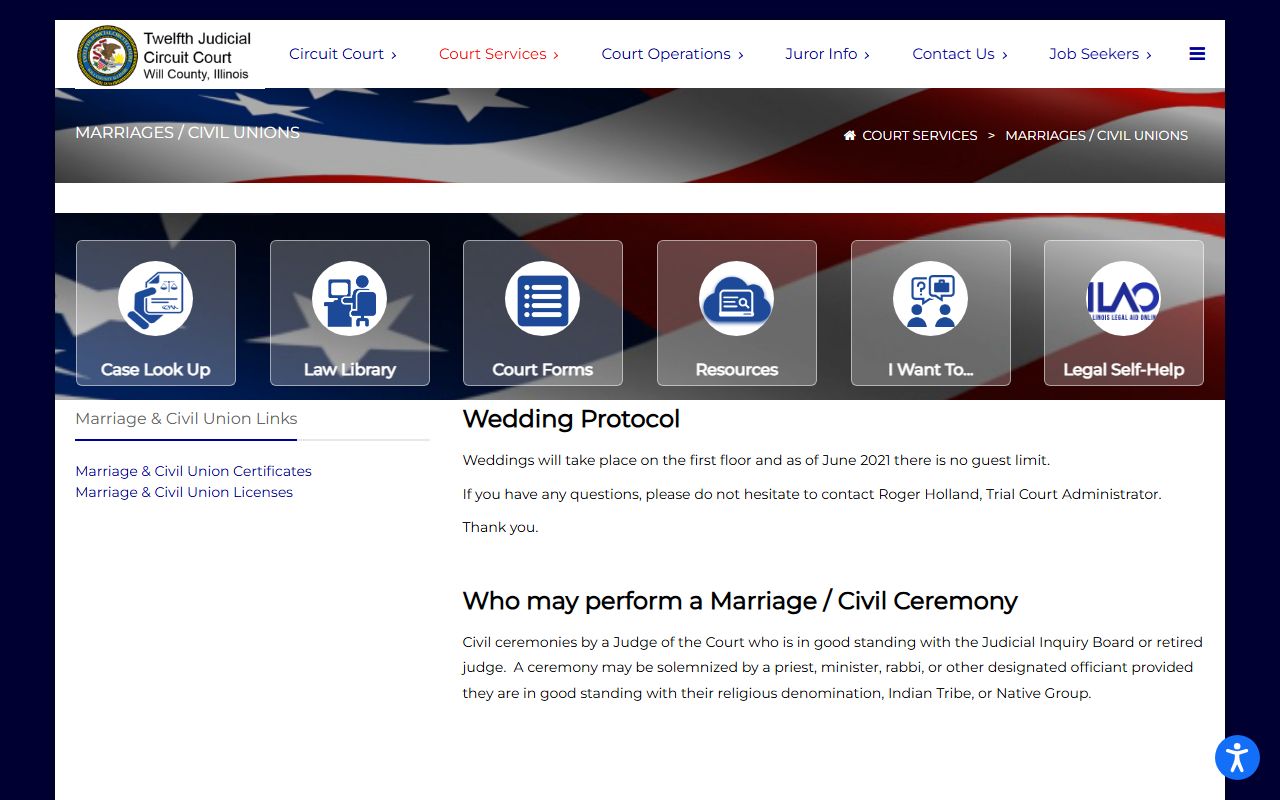
The page above ties the court side of marriages back to the County Clerk's license process, since the license has to come from the County Clerk before any judge will perform the ceremony.
Will County Divorce Records
Divorce is a Circuit Court case in Illinois, so Will County divorce records live with the Circuit Clerk. The current Circuit Clerk is Andrea Lynn Chasteen. The office sits at the Will County Courthouse, 100 W. Jefferson Street, Joliet, IL 60432. The main phone line is 815-727-8592. Hours run from 8:30 a.m. to 4:30 p.m., Monday through Friday, except court holidays.
Most divorce case files use a D case designation and are family law cases. They include the petition for dissolution, the response, any motions, parenting plans, support orders, the final judgment of dissolution, and post-judgment filings. Will County divorce records that are not restricted may appear in iPublic, the Circuit Clerk's online case lookup. Some details are sealed or redacted, such as financial affidavits, minor names, and any domestic violence content.
For background on the office itself, see the Clerk of the Circuit Court page. For the underlying court structure, see the Will County court records overview.
Filing for Divorce in Will County
Illinois is a no-fault state. The grounds for dissolution under 750 ILCS 5 are irreconcilable differences. The Circuit Clerk does not give legal advice, so people without lawyers often use the state-approved forms and free legal help. The steps below outline a basic filing path.
- Confirm venue and residency under 750 ILCS 5. At least one spouse must meet the state residency rule before a Will County case can move forward.
- Use the state-approved divorce forms or consult an attorney or legal aid. Self-help packets are often available through the Will County Law Library.
- E-file the petition through eFileIL, the statewide e-filing portal. Paper filing is allowed only for filers who qualify for an exemption.
- Pay the divorce filing fee or submit a fee waiver application. The Circuit Clerk's current fee schedule has the live amount.
- Serve the respondent under the Illinois Code of Civil Procedure. The Will County Sheriff or a special process server can handle service.
- Attend case management or status hearings. Mediation may be ordered for parenting time disputes.
- Complete the prove-up or final hearing. Ask the Circuit Clerk for a certified copy of the judgment of dissolution once entered.
People who cannot afford a lawyer can apply for help from a legal aid group. The Will County Public Defender does not handle divorce, since that office covers eligible criminal and juvenile matters.
Will County Divorce and Family Fees
The Circuit Clerk's fee schedule sets copy and certification rates for divorce records and other family cases. Plain copy and certification fees apply to most documents from the file. Order of protection copies for the petitioner are free. The table below shows the listed rates from the Circuit Clerk's simplified schedule.
| Item | Amount |
|---|---|
| Plain copy, first page | $2.00 |
| Plain copy, pages 2-20 | $0.50 per page |
| Plain copy, pages remaining | $0.25 per page |
| Certification or seal of office | $6.00 per document |
| Certified copy of judgment after first certified copy | $10.00 |
| Order of protection copies for petitioner | $0.00 |
| Current divorce filing fee | Verify on Circuit Clerk fee schedule |
Fees change. Always confirm the live amount on the Circuit Clerk's official fee schedule page before mailing in a request.
Confidential Family Documents
Family files include some of the most protected content in any court system. Will County applies the same statutory shields the rest of Illinois uses. The list below covers the main rules that limit access.
- Adoption files: 750 ILCS 50 seals adoption records. They are not ordinary public files and require a court order or qualifying party to access.
- Domestic violence cases: 750 ILCS 60 applies. The case may exist on the docket, but addresses, phone numbers, and other safety-sensitive details are redacted.
- Mental health content: 740 ILCS 110 protects mental health and developmental disabilities information that may show up in family files.
- Minor names: court policy and privacy rules redact full names of minor children in many family filings.
- Financial identifiers: Social Security numbers, bank account numbers, and similar identifiers are redacted from publicly viewable copies.
For broader access rules, see Will County public records.
Vital Records Act and Certified Copies
The Illinois Vital Records Act, 410 ILCS 535, governs marriage record access at the local level. The County Clerk is the office that issues certified copies of Will County marriages. The state vital records office holds statewide indexes but does not replace the local clerk for a Will County certified copy. Order from the County Clerk for the fastest result.
Divorce certified copies follow a different path. Certified copies of the judgment of dissolution come from the Circuit Clerk because the judgment is a court order, not a vital record. The Illinois Marriage and Dissolution of Marriage Act, 750 ILCS 5, sets the substantive law for the divorce itself.
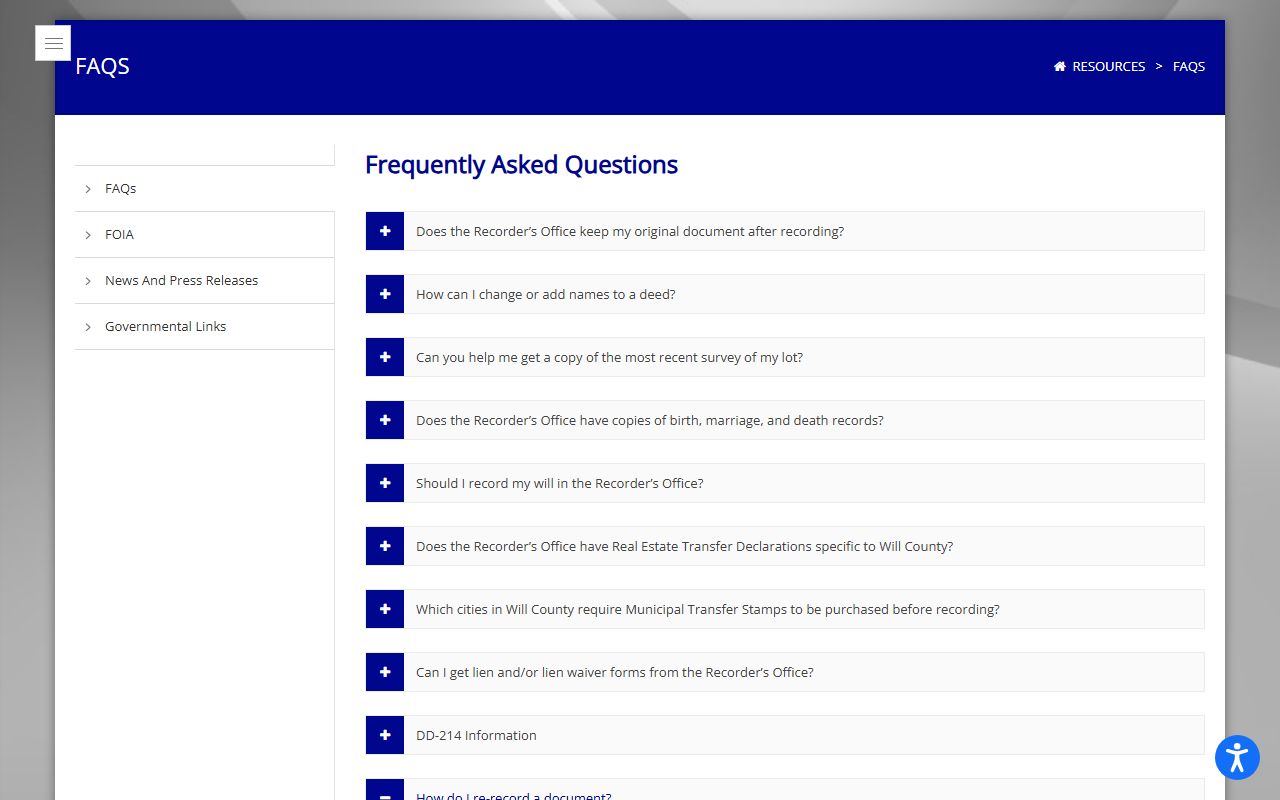
The Recorder's FAQ above notes that vital records belong to the County Clerk. The Recorder of Deeds office handles land records, not births, deaths, or marriages.