
Why Illinois Uses Circuit Court
Illinois reformed its court system through a constitutional change that folded the old patchwork of county, justice, magistrate, and police courts into one unified trial bench. The result is a three-level system: the Circuit Court at the trial level, the Illinois Appellate Court in the middle, and the Supreme Court of Illinois at the top. Will County sits inside that system as a single-county Circuit Court. There is no separate state district court in Illinois. The term "district court" in this state means a federal court, not a state trial court.
The Circuit Court has original jurisdiction in nearly all state matters. That is a broad grant. It covers felony charges, misdemeanor charges, traffic citations, civil suits, divorce, child support, probate, guardianship, juvenile cases, chancery, small claims, evictions, name changes, and orders of protection. The local Circuit Clerk keeps the files, attends court sessions, and holds court money on order. Because Illinois unified its trial courts, residents do not have to guess which lower court owns a case type. The Circuit Court is the right court for state law disputes filed in Will County.
This setup also fixes appeal routes. A final judgment from a Will County case heads to the Illinois Appellate Court, Third District before any further review. The Supreme Court of Illinois reviews most cases only by leave to appeal, and it controls the rules that shape Circuit Clerk operations.
The Twelfth Judicial Circuit
Will County is its own single-county circuit, known as the Twelfth Judicial Circuit. Many other counties in Illinois share a circuit with neighbors, but Will stands alone. That means the local court administration, chief judge's office, and Circuit Clerk all work at one county scale. Local case management, court schedules, courtroom assignments, and branch court operations are set inside this single circuit.
Andrea Lynn Chasteen is the Clerk of the Circuit Court. The Clerk is an elected state constitutional officer. She is not a judge. The Clerk's role is to file documents, keep the case file in order, post court schedules, collect fines and fees, and disburse money on court order. The Clerk's office runs iPublic, iAttorney, court schedule lookup, eFileIL e-filing, and i2File copy ordering. Each tool has a place in a real Will County Circuit Court case search.
Note: The online iPublic case search is a limited view of the case management system and is not the official court record.
Will County as Single-County Circuit
Because Will is a single-county circuit, every case type that lives in the Circuit Court lives here in Joliet and at the county branch courts. The court hears felony and misdemeanor crime cases, civil law cases, family and divorce matters, probate estates, juvenile cases, traffic citations, chancery matters, small claims, evictions, and orders of protection. The Clerk uses standard Illinois case-type codes to keep these files apart, like CF for criminal felony, CM for misdemeanor, TR for traffic, DT for DUI traffic, P for probate, and D for dissolution. Those codes show up on the case number and on the iPublic results page.
Civil disputes start by a complaint or petition filed with the Clerk. Criminal cases start with a charge brought by the State's Attorney after an arrest by the Sheriff or a local police agency. Family cases are filed in the Family Division of the Circuit Court. Probate filings open an estate, name an executor or administrator, and proceed under court watch. Juvenile cases are sealed from broad public view by statute, with limited access for parties and counsel. Traffic cases run on heavy weekly call dockets in Joliet and at branch locations. Will County court records for every one of these case types are kept by the Clerk of the Circuit Court.
Will County also runs Holiday Court for bail, Saturday weddings, emergency orders of protection, and emergency injunctive relief. That keeps urgent matters moving when the main courthouse is closed.
Will County Courtroom Assignments
The Twelfth Judicial Circuit posts a current assignment list on its homepage that shows which judge sits in which courtroom and what case type that room handles. The table below mirrors that list. Rooms 101 through 304 sit on the lower floors and hold traffic, local misdemeanor, first appearance, and last-name-split misdemeanor calls. Rooms 401 through 503 hold the felony and felony-related calls on the upper floors. Room 440 is reserved for mediation work. Lobby boards and Clerk staff can confirm the day's location if a room moves.
| Judge | Room | Case Type |
|---|---|---|
| J. Harvey | 101 | Traffic |
| Pavich | 201 | Local Misdemeanor |
| Ewanic | 202 | First Appearance |
| Tisdale | 301 | Misdemeanor Last Name L-Q |
| Hale | 302 | Misdemeanor Last Name F-K |
| Safford | 303 | Misdemeanor Last Name A-E |
| DeWilkins | 304 | Misdemeanor Last Name R-Z |
| Harvey | 401 | Criminal Felony / Mental Health |
| Connor | 403 | Criminal Felony |
| Cornelius | 404 | Criminal Felony |
| Bertani-Tomczak | 405 | Criminal Felony |
| Mediation | 440 | Mediation |
| Jones | 501 | Criminal Felony |
| Colon-Sayre | 502 | Criminal Felony |
| Smigielski | 503 | Criminal Felony |
The split of misdemeanor calls by last name keeps the daily call load even across the third floor. Felony calls on the fourth and fifth floors share the heaviest matters in the Circuit Court, including violent offenses, drug offenses, and felony DUI. Room 401 also carries the Criminal Felony/Mental Health call, which links to the local problem-solving court program.
Comparison of Court Levels in Will County
Illinois unified its trial courts, but local administrative bodies still handle some matters outside the Circuit Court case stream. A short side-by-side helps show where a case lives. The Circuit Court handles state law cases. Local municipal hearings handle code and ordinance citations. Branch court sites are still Circuit Court calls, but in a satellite room.
| Circuit Court | Municipal / Admin Adjudication | Branch Court | |
|---|---|---|---|
| What it handles | Felony, misdemeanor, civil, family, probate, juvenile, traffic, chancery, small claims, evictions, orders of protection | Local ordinance citations, parking, code enforcement | The same Circuit Court calls (often traffic, minor criminal) heard at a branch site |
| Where it is filed | Clerk of the Circuit Court, 100 W. Jefferson St., Joliet | Local city or village hearing office | Clerk of the Circuit Court, then heard at the branch room |
| Who decides | A Circuit or Associate Judge of the Twelfth Judicial Circuit | An administrative hearing officer named by the local body | A Circuit or Associate Judge sitting at the branch |
Branch courts are not lower courts. They are still part of the Circuit Court. A traffic ticket heard at a branch is the same kind of case as one heard in Room 101 in Joliet. Only the room is different.
How a Will County Case Moves Through the System
Most cases follow a known path from filing to final review. The Clerk opens a case file when the first document is filed and assigns a case number with a category code. The Circuit Court hears the case to a final order. The losing side may appeal, with timing rules that start the clock at the final order. Supreme Court review is by leave to appeal in most matters.
- Filing with the Clerk of the Circuit Court (complaint, petition, charge, or citation)
- Circuit Court hearing in the assigned courtroom at the Will County Courthouse or a branch
- Disposition (judgment, plea, sentence, or dismissal)
- Appeal to the Illinois Appellate Court, Third District
- Discretionary review by the Supreme Court of Illinois (by leave to appeal)
Civil and criminal flows look similar at this high level. The big difference is at the front end. Civil cases start with a filing by a party. Criminal cases start with a charge after an arrest, often after a bond or pretrial release decision. Both end at the same appellate door.
Appeals to the Illinois Appellate Court, Third District
The first step after a final appealable order from Will County is the Illinois Appellate Court, Third District. The Appellate Court is the intermediate court of review. It does not retry a case. It looks at the trial-court record and the briefs to decide if the law was applied right.
Timing matters. A notice of appeal must be filed within the time set by the Illinois Supreme Court Rules, and that clock starts at the entry of the final judgment or order being appealed. Post-trial motions can extend that clock, but only in the way the rules allow. Missing the deadline ends the appeal. The Clerk of the Circuit Court prepares the record on appeal, including pleadings, orders, and the report of proceedings, on the schedule set by the rules.
The Appellate Court can affirm, reverse, modify, or remand. Most cases stop here. A small share move on to the Supreme Court of Illinois on a petition for leave to appeal. For docket and hearing schedule lookups before that step, see Will County court dockets.
The Illinois Courts site outlines the Appellate Court structure on its official Appellate Court page.
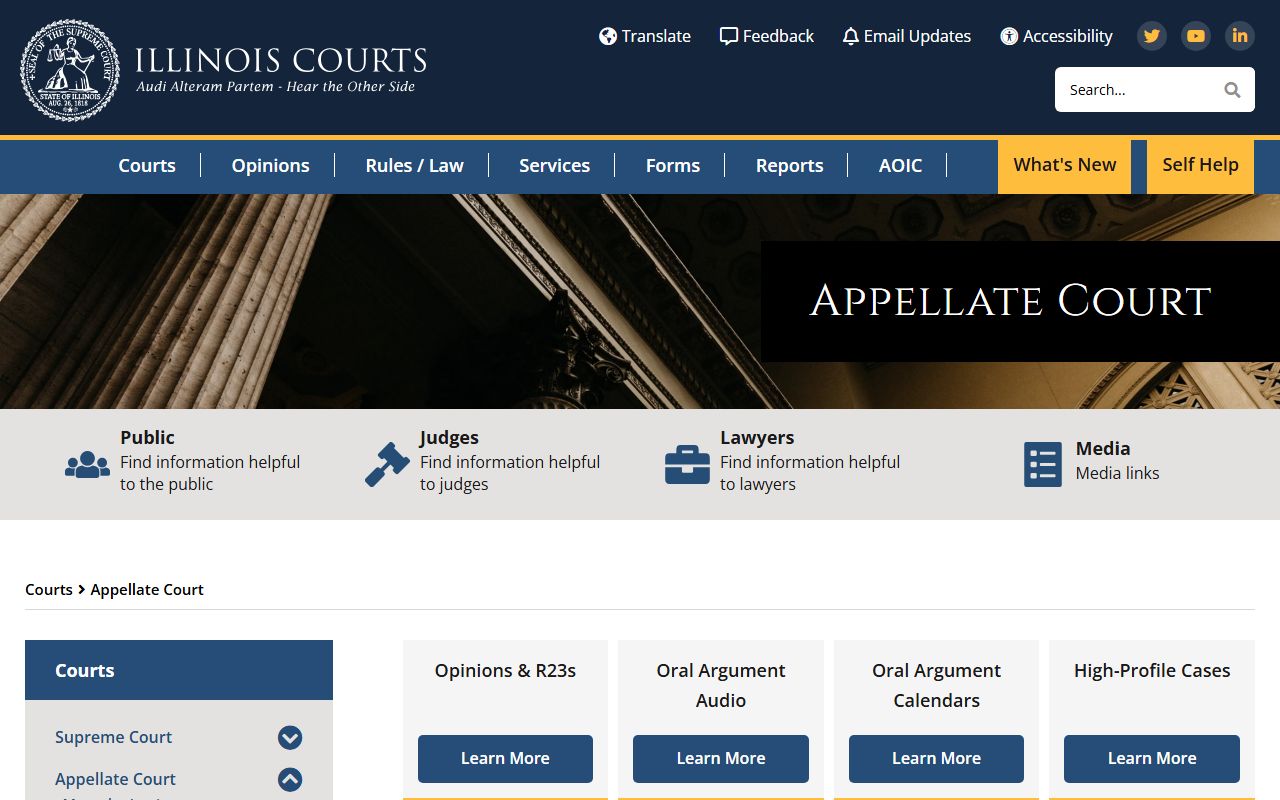
The Third District covers Will County and a number of nearby counties. Most appeals from Joliet courtrooms head there first.
Supreme Court of Illinois Supervision
The Supreme Court of Illinois sits at the top of the state court system. It hears most cases by leave to appeal, which means review is discretionary. Some classes of cases come up on direct appeal under the rules. The Court also has supervisory authority over the lower courts and can step in by supervisory order when needed.
The Supreme Court controls the rules that shape Will County practice. That includes the Illinois Supreme Court Rules on civil and criminal procedure, the rules on appeals, and the Electronic Access Policy that governs how court records appear online. The Electronic Access Policy is the reason iPublic is a limited public view, why document images do not appear there, and why the Clerk asks the public to use onsite terminals or i2File for full records.
The Court's own page at the Supreme Court of Illinois outlines its role and members.
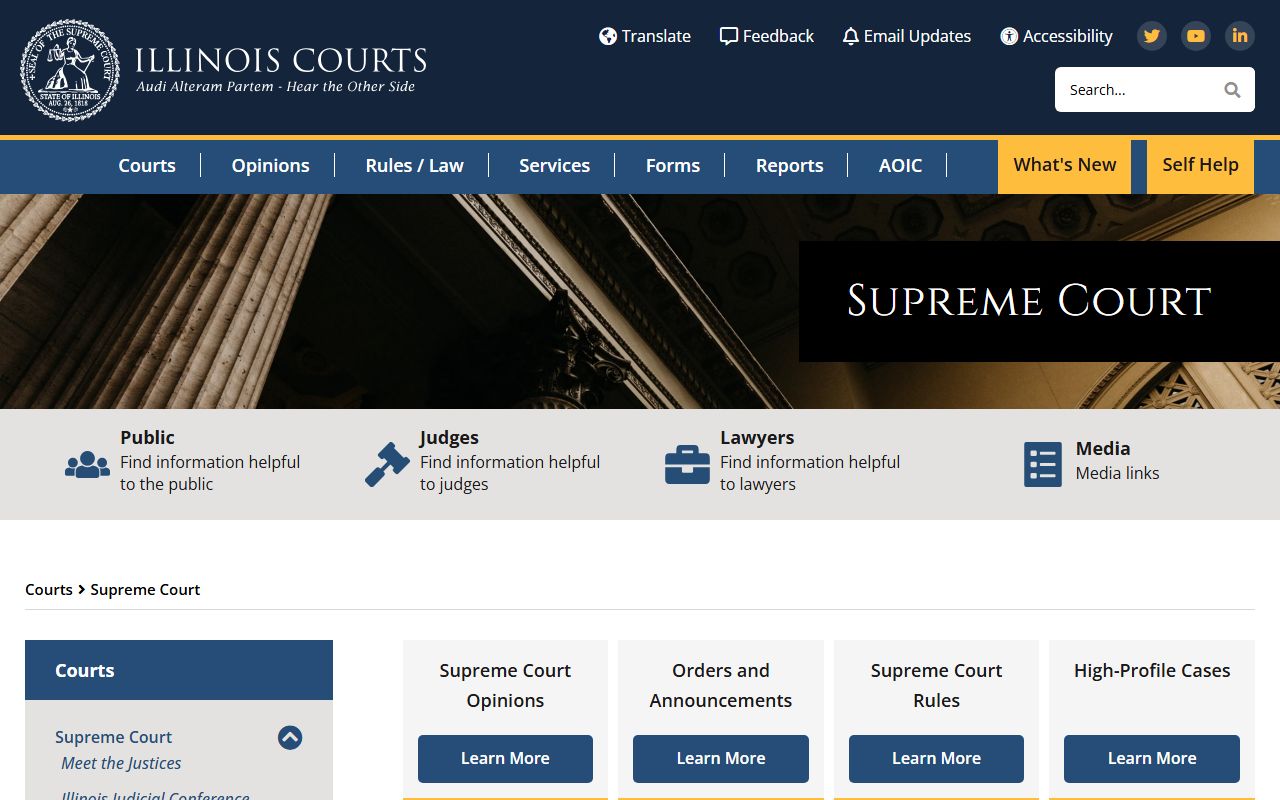
The Court has also approved free remote public access to non-confidential Supreme and Appellate documents under recent administrative orders. Circuit-court level remote document access is still a future focus.
Will County Court Branch and Specialty Locations
The main courthouse holds most calls, but the Twelfth Judicial Circuit also uses branch and specialty sites in the county. The address cards below cover the main Will County Circuit Court sites that show up most often in real case lookups.
100 W. Jefferson Street
Joliet, IL 60432
Phone: 815-727-8400
57 N. Ottawa Street
Joliet, IL
3208 W. McDonough Street
Joliet, IL
Plainfield Police Department
14300 S. Coil Plus Drive
Plainfield, IL
Weapons and outside food or drink are not allowed in any Twelfth Judicial Circuit courthouse. Phones and smart devices are allowed, but video or audio recording needs preauthorization from the Chief Judge's Office. Firearms are barred from circuit court buildings under state law.
Specialty and Problem-Solving Courts
Will County runs problem-solving and specialty court calls inside the Circuit Court. Room 401 holds the Criminal Felony/Mental Health call, which links felony case management with mental health treatment monitoring. DUI cases follow split routing: misdemeanor DUI cases use DT or CV designations and are heard on the third floor, while felony DUI CF cases sit on the fourth floor.
The Circuit Court also runs mandatory arbitration for civil cases under the Court Services program. Arbitration hearings are held in person unless the court orders otherwise. Family cases use the Family GAL and Family Mediator programs to help resolve custody and parenting time disputes. The county DUI page links to an approved alcohol treatment and evaluation provider list that DUI defendants use to meet treatment requirements.
Note: Full eligibility rules, length of program, and graduation data for each specialty court are not posted in one place on the official site; verify with the Clerk or the Chief Judge's office before applying.
Recent Will County Judicial Appointments
The Twelfth Judicial Circuit bench changes from time to time as the Supreme Court of Illinois appoints judges to fill terms and seats. A few recent moves stand out and shape current courtrooms.
On January 28, 2025, the Supreme Court of Illinois appointed Sonni Choi Williams as a Circuit Judge in the Twelfth Judicial Circuit, Third Subcircuit, effective February 10, 2025 through December 7, 2026. The court news release covered the appointment. In September 2025, Illinois Courts highlighted Judge Jessica Colon-Sayre of the Twelfth Judicial Circuit for Hispanic Heritage Month and noted that she is the first Latina Circuit Judge in Will County. Her assignment shows on the courtroom list in Room 502. Judge Amy Christiansen has also served in Will County problem-solving courts and worked with clients in mental health court, which ties back to the Room 401 call.
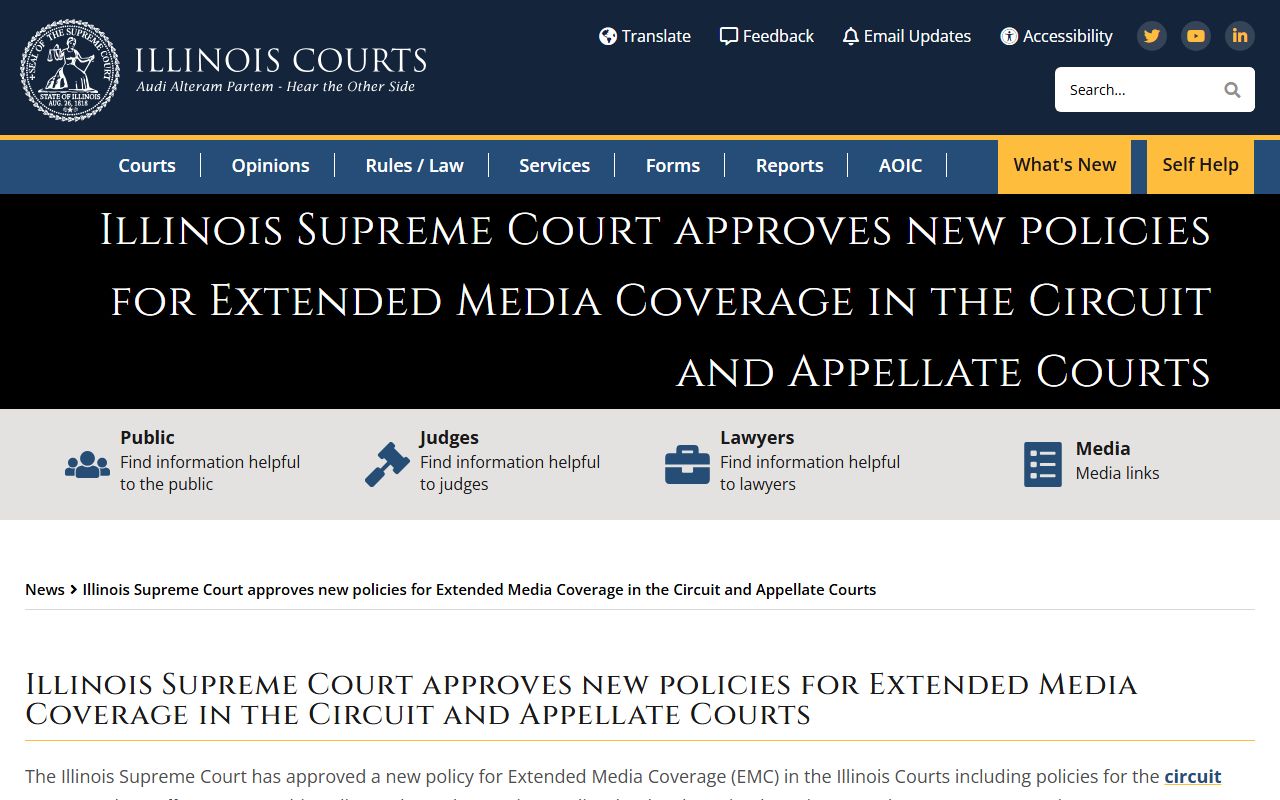
The Illinois Supreme Court has also approved updates to media coverage rules; see the Extended Media Coverage policy update.
For courtroom-by-courtroom contact and Clerk's office hours, see the Clerk of the Circuit Court page. For vital records and marriage licenses, see the County Clerk page.
Federal Courts Affecting Will County
Federal cases that arise in Will County are filed in the federal court system, not in the Circuit Court. Federal records are not held by the Will County Circuit Clerk. They live in the federal court's own docket system. Public users can reach federal records through PACER and CM/ECF, with some free access at courthouse terminals.
The main federal trial court for Will County is the U.S. District Court for the Northern District of Illinois. Filings move through the court's CM/ECF system, and the public looks them up through PACER. Bankruptcy filings go to the U.S. Bankruptcy Court for the Northern District of Illinois. Federal appeals head to the U.S. Court of Appeals for the Seventh Circuit. Federal prosecutions are brought by the U.S. Attorney's Office, Northern District of Illinois. Free third-party access to many federal opinions and dockets is on CourtListener.
The Northern District of Illinois handles most federal trial-level matters tied to Will County.
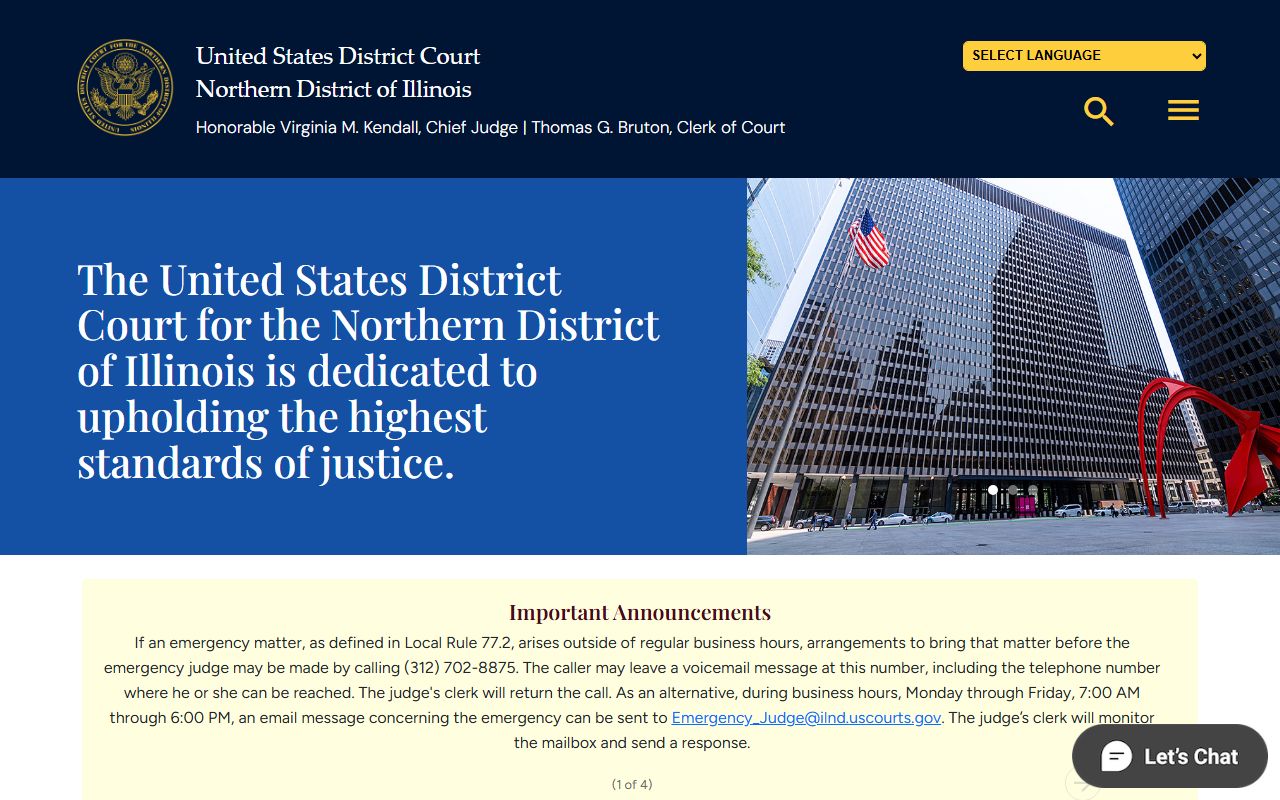
Federal e-filing for attorneys and case lookup for the public both run through the same system. Most public users start with PACER for a federal record and then drop in to CM/ECF for live docket pages.
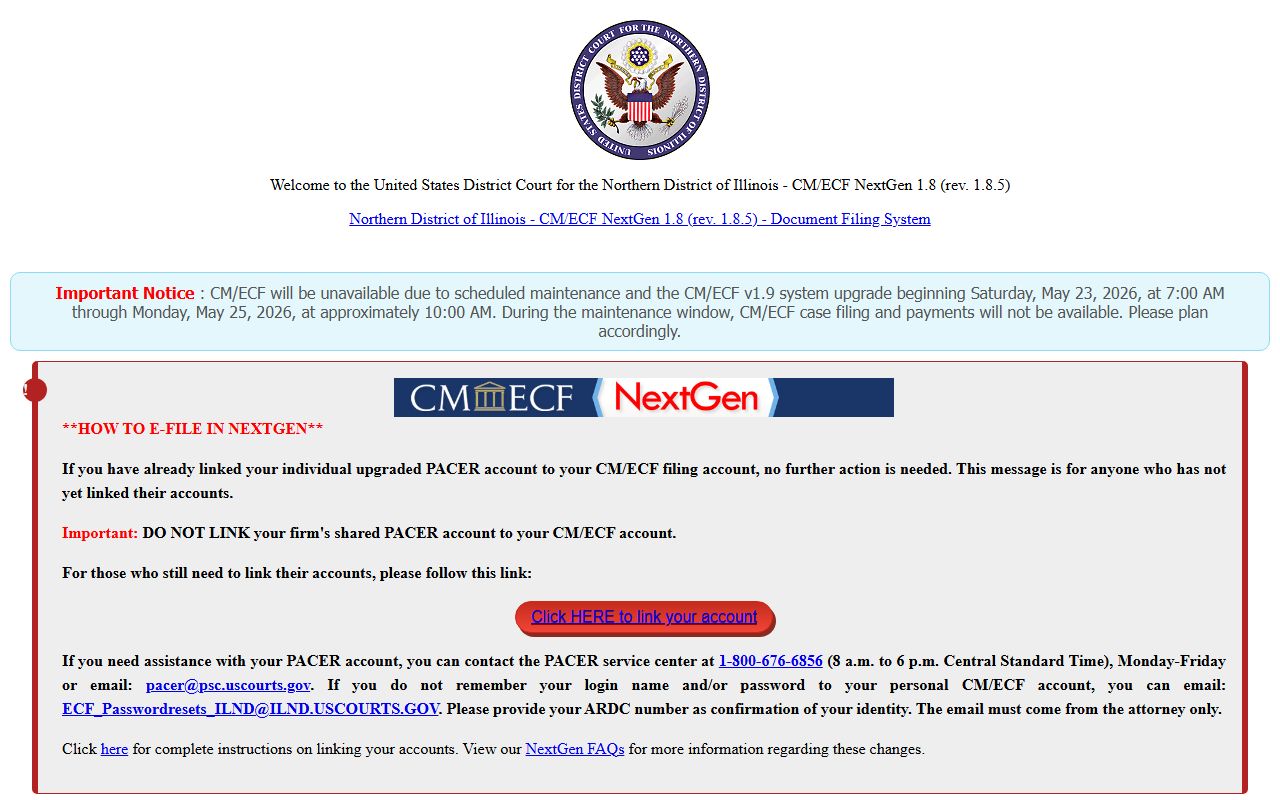
Account, fee, and search basics are on the Northern District CM/ECF portal.
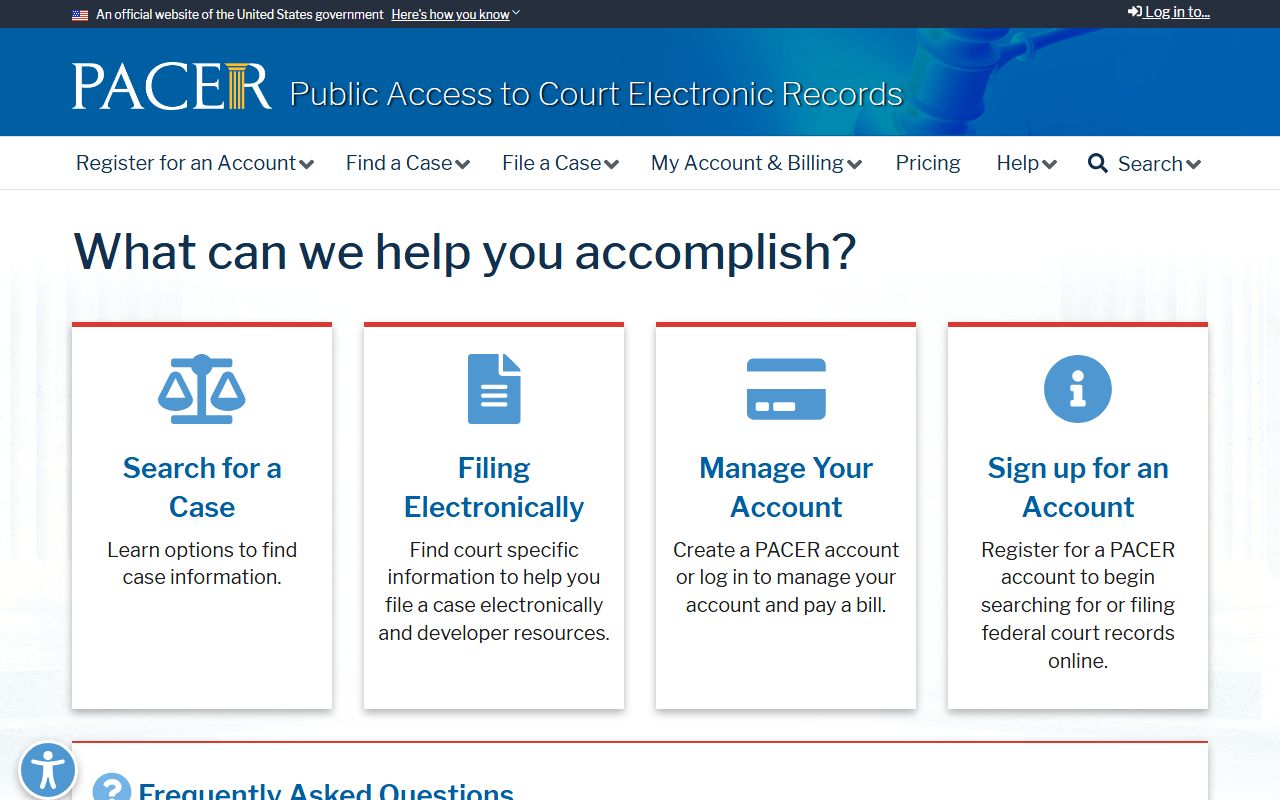
PACER charges per page above a small free quota each quarter. Many users qualify for fee waivers or simply view dockets at a federal courthouse terminal.
See the PACER service center for account setup and fee details.
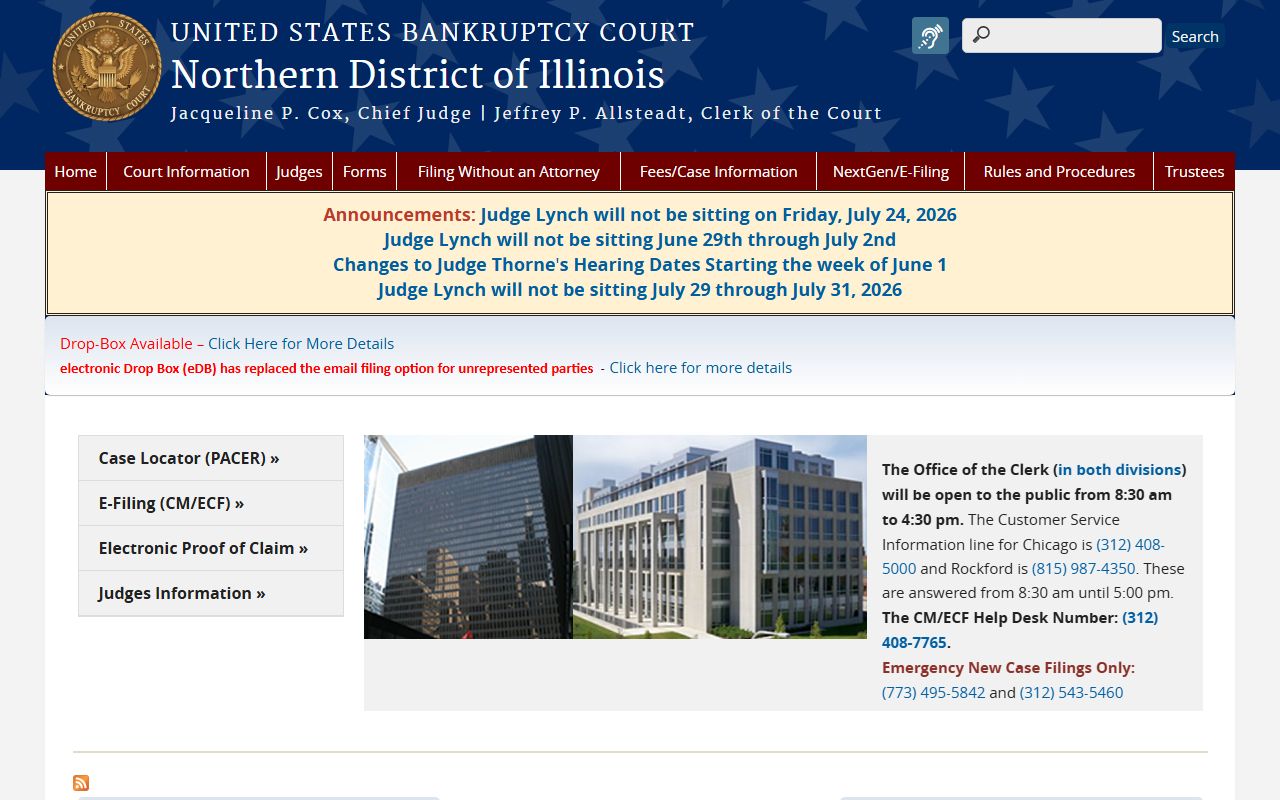
Bankruptcy is its own federal track. A Chapter 7, Chapter 11, or Chapter 13 case from a Will County resident is filed in the bankruptcy court, not in the Circuit Court.
The U.S. Bankruptcy Court for the Northern District of Illinois has filing forms, fees, and judge assignments.
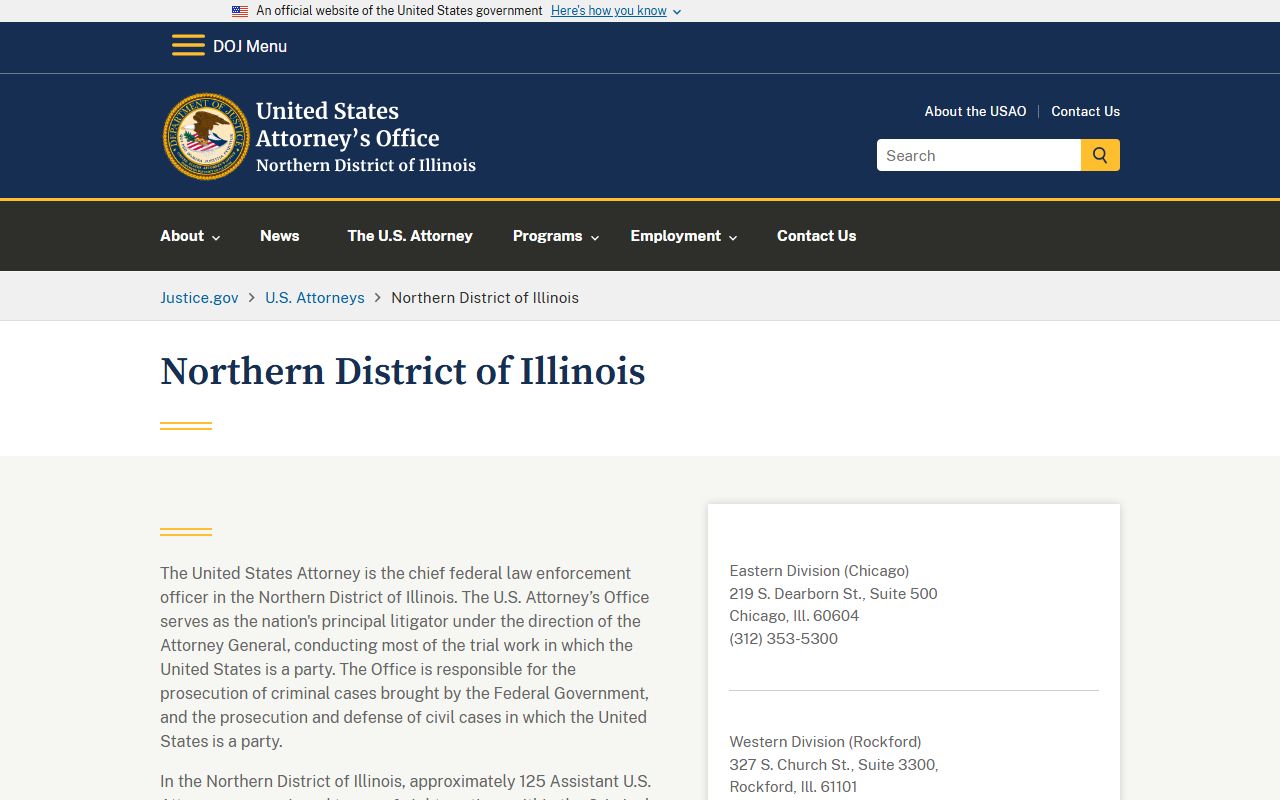
Federal criminal cases are prosecuted by the U.S. Attorney's Office. State criminal cases stay with the Will County State's Attorney and the Circuit Court.
The U.S. Attorney's Office, Northern District of Illinois handles federal prosecutions tied to Will County.
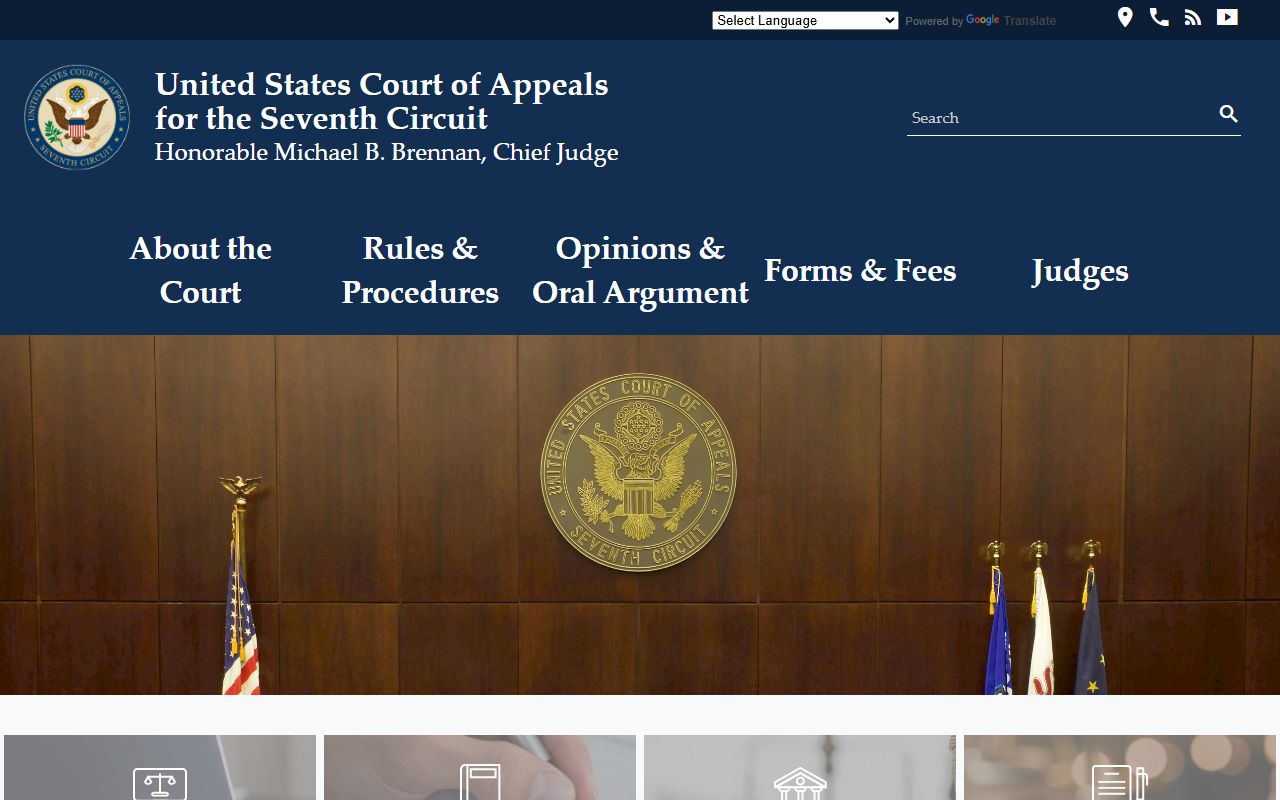
Federal appeals from the Northern District head to the Seventh Circuit. Most appeals are by right after a final order.
The U.S. Court of Appeals for the Seventh Circuit posts dockets and opinions on its own site.
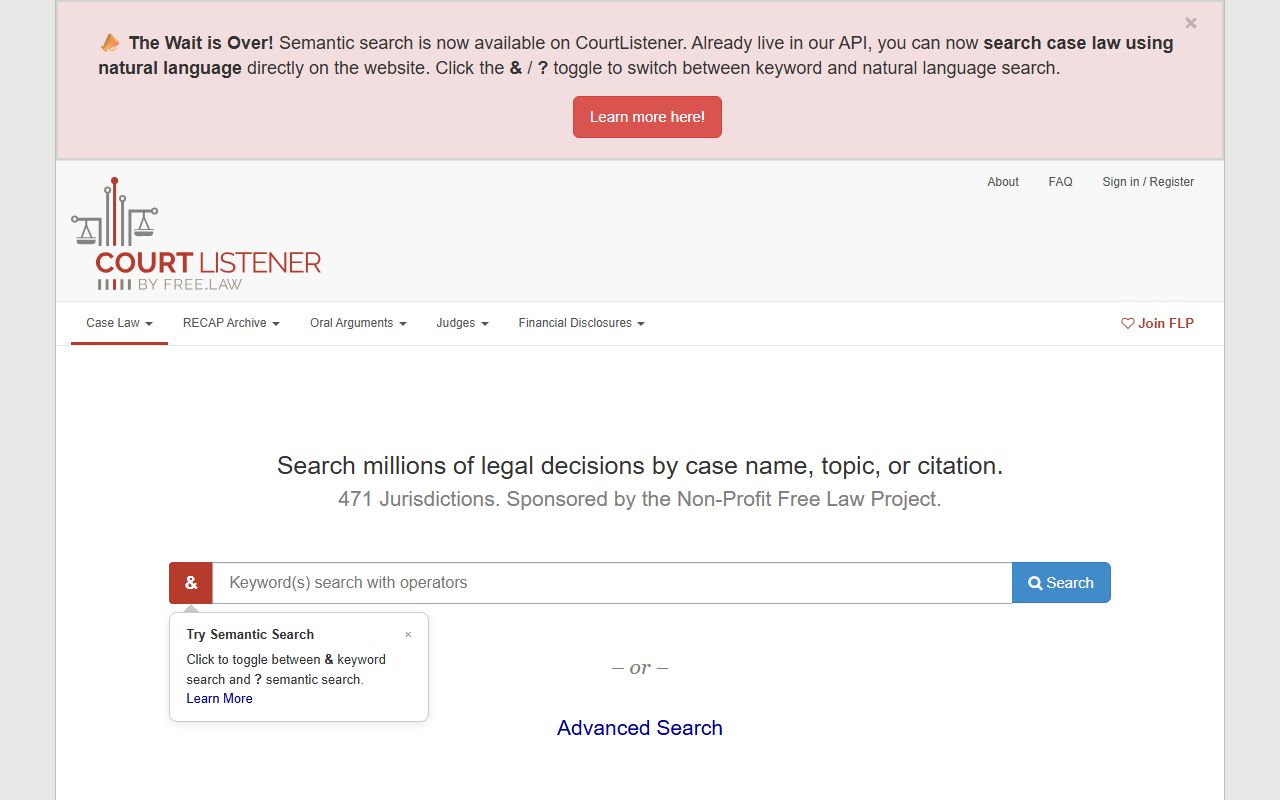
For free background research, CourtListener pulls together federal opinions, briefs, and docket entries in one place. It is a good supplement to PACER for users who do not need certified records. For Will County criminal records, the state side stays with the Circuit Clerk.
Try CourtListener for free federal opinion and docket research that may include Will County cases.
Note: Federal records are separate from Circuit Court files; check both systems when a case spans state and federal lines.